
Article from: August 13, 2026
What Makes Europe Operational?
In my previous article, From Liberal Europe to Operational Europe, I argued that Europe is entering a new phase: one in which strategic success will increasingly be measured by the ability to build capabilities, implement decisions and deliver results.
But what makes that possible?
Technology.
Not technology as a collection of products or fashionable innovations, but technology as the infrastructure and capability that increasingly connects security, industry and economic power.
The 2026 NATO Summit in Ankara provided a clear illustration of this shift. Alongside defence investment and industrial production, Allies announced new capabilities involving uncrewed systems, advanced technologies, intelligence, space, cyber and innovation. NATO also launched initiatives designed to accelerate the adoption of innovation and expand industrial capacity.
This points toward a new strategic reality: Security, technology and economy can no longer be treated as separate systems.
1. Security Is Becoming a Technology Problem
Security has traditionally been associated with armed forces, weapons and defence infrastructure.
That definition is no longer sufficient.
Modern security increasingly depends on the ability to protect digital networks, communications, energy systems, critical infrastructure, data and supply chains — while maintaining the technological capabilities required for defence.
Artificial intelligence, cyber capabilities, satellites, sensors, autonomous systems and secure communications are becoming integral parts of the security environment.
The Ankara Summit reflects this evolution. NATO identified uncrewed systems, space and cyber capabilities, advanced technologies and intelligence among the capabilities needed to maintain its strategic advantage.
The implication is significant: Technological capability is becoming part of security capability.
2. Technology Is Becoming Infrastructure
Technology is no longer simply something organisations use. Increasingly, it is something societies depend on.
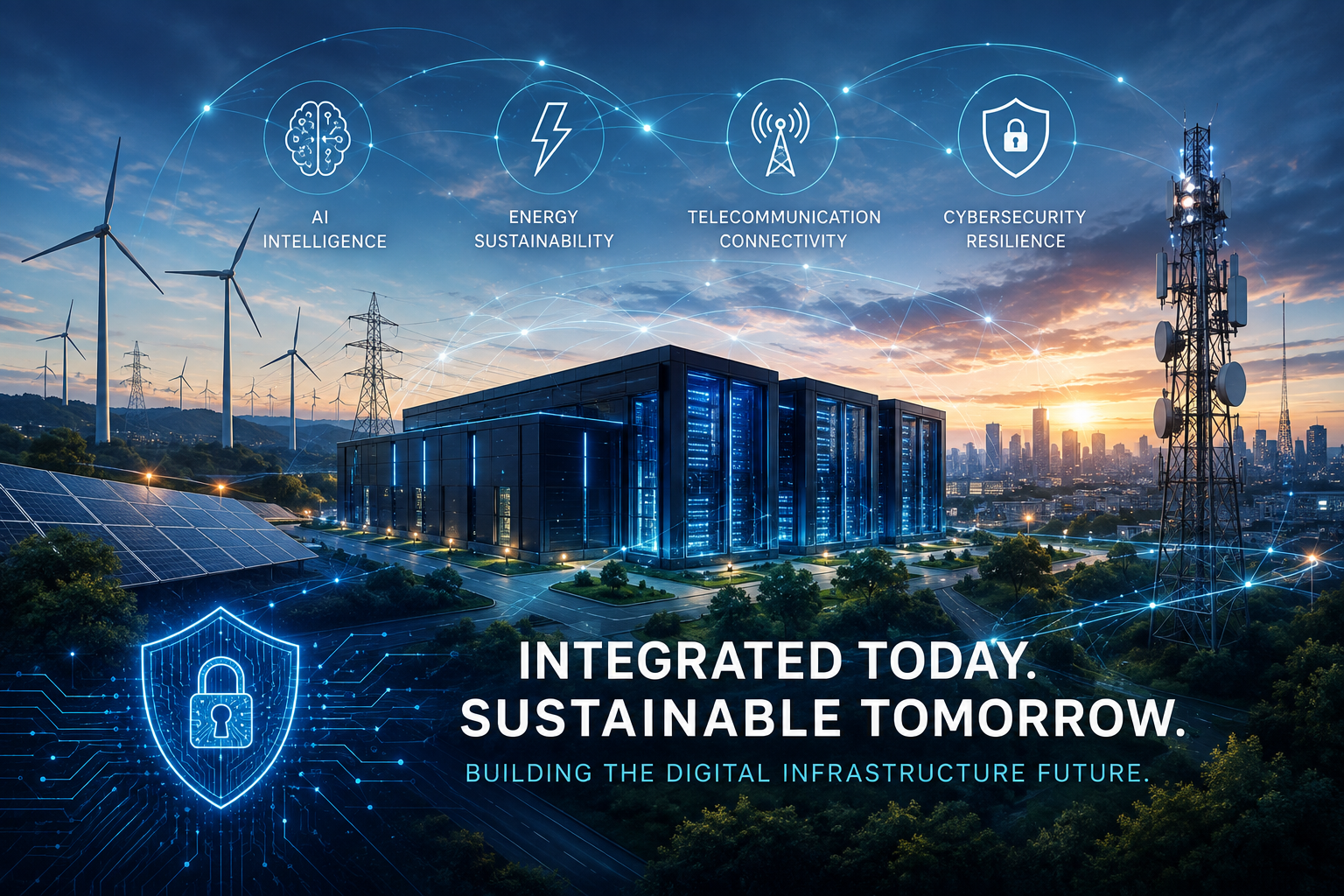
AI depends on compute, data centres, semiconductors, networks and energy.
Digital services depend on telecommunications and cloud infrastructure.
Autonomous systems depend on sensors, communications, software, AI and manufacturing.
Cybersecurity depends on secure hardware, software, networks and skilled people.
This means that technological sovereignty cannot be reduced to owning a successful technology company or developing a particular application.
The strategic question is much broader: Can you build, access, secure and scale the infrastructure on which your technology depends?
That is why semiconductors, cloud infrastructure, data centres, telecommunications, energy and advanced manufacturing are increasingly strategic assets.
3. Technology Needs an Economy Behind It
Technology alone does not create capability.
It needs capital, industrial capacity, energy, engineering talent, manufacturing, research and markets capable of scaling innovation.
This is one of the most important signals coming from the current European and NATO transformation.
At the Ankara Summit, NATO moved beyond the question of how much Allies should spend and increasingly focused on how investment can translate into production, innovation and deployable capability. New initiatives such as the NATO Engine are explicitly aimed at expanding industrial production capacity and connecting manufacturing capabilities across the Alliance.
The European Union is moving in a similar direction. Recent European defence initiatives place increasing emphasis on drones, counter-drone systems, space, air and missile defence and strengthening Europe’s defence technological and industrial base.
The message is becoming clear: Technology needs an economic and industrial ecosystem capable of turning innovation into scale.
4. The Strategic Triangle
This creates what I see as the foundation of Operational Europe:
SECURITY – TECHNOLOGY – ECONOMY

Security creates the strategic requirement.
Technology creates the capability.
The economy creates the capacity to build and scale that capability.
But the relationship works in both directions.
A strong technology base strengthens the economy. A strong economy enables technological investment. And both strengthen security.
This is therefore not three separate policy areas.
It is a single strategic system.
5. From Innovation to Capability
This is also where my earlier concept of Integrated Innovation becomes particularly relevant.
The challenge for Europe is no longer simply to generate innovation.
It is to transform innovation into operational capability.
That requires connecting research with industry, technology with infrastructure, investment with production, and expertise with execution.
The countries and organisations that succeed in the next decade will not necessarily be those that invent the most technologies.
They will be those that can develop, deploy, scale and secure technology faster and more effectively.
That is what will make Europe operational.
Bottom Line
Operational Europe requires more than policies and investment. It requires the ability to develop, deploy, scale and secure critical technologies.
This is where security, technology and economy converge.
Europe’s operational capability will increasingly depend on its technological capability.